
In this article 5 sections
Engineering firms often have hours of recorded webinars, conference presentations, and internal training sessions, yet very little of that knowledge reaches prospective clients. A presentation about protection coordination or interconnection studies may contain valuable insight, but a sixty-minute recording rarely answers a buyer’s immediate question efficiently.
A focused YouTube strategy for engineering firms turns approved technical expertise into short, searchable explanations that support procurement research, strengthen credibility, and lead interested viewers toward relevant services. The goal is qualified education, not viral views.
Building a Technical YouTube Strategy That Supports Engineering Buyers
Useful engineering videos begin with a specific audience and decision. A utility engineer evaluating outside support needs different information from a renewable developer exploring early-stage interconnection requirements. Each recording should make a technical subject easier to understand without overstating the firm’s capabilities.
Start With Buyer Questions, Not Available Footage
Review sales calls, proposal questions, website searches, and conversations with engineering principals. Identify recurring questions that your firm can answer accurately and publicly.
For a protection engineering practice, a useful topic might explain what information is needed before a protective device coordination study. For a substation consultant, the video could distinguish physical design deliverables from protection and control scope. For a developer-focused firm, a short explainer might address study inputs rather than promise interconnection approval.
For related guidance, explore YouTube growth for engineering companies and Technical content marketing for engineering firms.
Choose subjects that reflect services the firm actually performs. A video is more commercially useful when the right buyer recognizes a real project need.
Turn One Webinar Into a Useful Video Series
Suppose a senior engineer recorded a forty-five-minute presentation about brownfield substation upgrades. Instead of uploading the entire presentation as the only resource, review its sections for self-contained questions.
One edited video could explain common drawing-interface challenges. Another could discuss outage coordination considerations. A third could explain how review responsibilities change between preliminary and detailed engineering.
Keep the original long-form webinar where useful, but give each shorter video a focused opening, a technically reviewed explanation, and a clear closing takeaway. Do not cut out qualifications that change a technical statement’s meaning.
Choose Video Formats That Fit the Subject
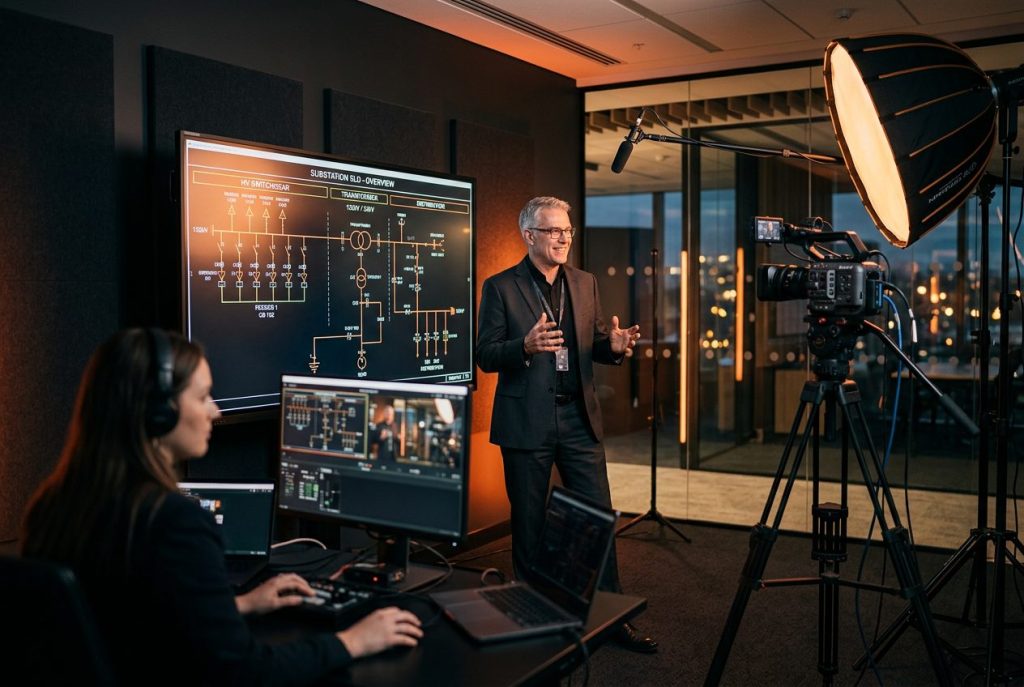
Technical explainers work well when an engineer narrates an approved diagram or discusses a process on screen. Project discussions can examine constraints, scope, and lessons learned using authorized materials. Recorded webinars are suitable when the topic needs greater depth and the speaker has permission to publish.
Not every video needs an on-camera presenter or studio. Clear audio, legible visuals, and accurate explanations matter more than elaborate production.
Never expose confidential client drawings, relay settings, infrastructure security details, proprietary models, or restricted project data. Obtain client and subject-matter approvals before filming or publishing.
Give Engineers a Practical Review Process
Marketing staff can shape the script, but technical specialists should approve service descriptions, standards references, calculations, and project claims. Begin with a short subject-matter interview, draft an outline, then obtain engineering sign-off before recording.
After editing, verify that captions, graphics, examples, and spoken statements preserve the approved meaning. Check any visual material for identifying details and remove unauthorized information.
For sector-specific context, see our work with Grid modernization companies. Learn more about Switchyard Growth and our approach to engineering-focused marketing.
Switchyard Growth’s technical content strategy provides a complementary framework for turning expert knowledge into trustworthy buyer resources.
Make Videos Easy to Find and Navigate
Use titles that describe a real question rather than broad promises. “What a Protection Coordination Study Needs From the Facility Owner” is more informative than “Engineering Excellence Explained.”
Write a unique description explaining the video’s topic, its intended audience, and any important scope limitations. Add accurate captions and, where supported, chapters so viewers can jump to relevant sections. Review the thumbnail for clarity and avoid clickbait.
A relevant website link can appear in a long-form video’s description when the channel has the required external-link features enabled. Do not depend on links in Shorts descriptions, which YouTube does not make clickable.
Connect Every Video to a Relevant Website Page
A video should not become an isolated marketing asset. Embed a protection study explainer on the corresponding engineering service page with a concise written summary and useful context. Link to the page from the video description where the platform allows it.
A developer-facing interconnection video should point to that specific capability, not an unrelated homepage. The website page can explain deliverables, project fit, approved experience, and how to discuss a scope.
Explore the Switchyard Growth homepage for an overview of our services.
A coordinated YouTube and technical video strategy connects recordings with the content that helps buyers move toward a meaningful conversation.
Distribute Videos Through Existing Professional Relationships
Share relevant clips with utility, EPC, developer, and industrial audiences where the subject fits their responsibilities. A principal might use a concise clip to introduce a LinkedIn discussion; a business development manager could share a full explainer after a prospect asks about deliverables.
Avoid mass outreach or turning every technical explanation into a sales pitch. Organize a small library by service and buyer type so teams can reuse approved videos appropriately.
A structured engineering business development process can help connect that content with relevant account conversations and follow-up.
Measure Buyer Education, Not View Counts Alone
Review YouTube traffic sources, audience retention, and whether viewers reach related resources. On the website, track meaningful engagement with the service page and properly attributed inquiry activity.
A video viewed by a small number of qualified utility engineers may offer more business value than one attracting unrelated student traffic. Track whether relevant viewers request technical discussions, become proposal opportunities, or reference a video during sales conversations.
Use these findings to refine future topics, not to promise a particular number of views or projects.
Conclusion

YouTube for engineering firms works best when technical presentations are reshaped into buyer-focused explanations, reviewed by qualified engineers, and connected to relevant website pages. Technical explainers, project discussions, and webinars can build trust when they remain accurate and useful.
If your firm has expert presentations but no repeatable video plan, contact Switchyard Growth to discuss a technical video strategy that fits your services, review capacity, and target buyers.
FAQs
What types of YouTube videos should engineering firms make?
Start with technically reviewed explainers answering buyer questions, approved project discussions, and focused segments from recorded webinars. Match each video to an actual service and audience.
How long should an engineering YouTube video be?
Long enough to answer its question accurately without unnecessary material. Some subjects suit a short explainer, while complex technical discussions need a longer format.
Do engineers need professional filming equipment?
Not necessarily. Clear sound, readable diagrams, controlled screen sharing, and accurate captions can support effective educational videos without an expensive studio.
Can engineering webinars be published without client approval?
Only if the firm has the necessary rights and permissions for the material shared. Review client confidentiality, speaker permissions, drawings, and any sensitive project details before release.
How do YouTube videos generate engineering project inquiries?
Videos can help qualified buyers understand expertise and follow links to matching service pages. Relevant evidence, clear scope, and an appropriate inquiry path support conversations without guaranteeing conversions.
Related Articles
By Taqweem Ahmad, Founder, Switchyard Growth
Written by Taqweem Ahmad
Founder, Switchyard Growth
Founder of Switchyard Growth and a digital marketing specialist with more than seven years of experience and over 1,000 SEO audits delivered or overseen. Taqweem leads search, AI visibility and website strategy for power and utility engineering firms.